A fully equipped gutter business costs roughly $31,300–$79,200 to start, according to a published 2026 itemisation, and the two largest lines are the work truck and the seamless gutter machine.
The machine alone typically runs $5,000–$12,000; everything else — trailer, ladders, fall protection, first coil, licensing, and a year of insurance — makes up the difference. A lean, financed start is genuinely possible: one operator reports starting for about $3,000 with a lease-to-own trailer and a financed machine at roughly $1,200 a month.
Gutter business startup cost, line by line
These are published bands, not quotes. Your state, your truck situation and your insurance history move every line.
| Line item | Low | High | Notes |
|---|---|---|---|
| Work truck / van | $10,000 | $35,000 | Used is normal; a truck you already own removes this line entirely. |
| Seamless gutter machine | $5,000 | $12,000 | The single largest equipment decision. Financed by most first-year operators. |
| Trailer | $2,000 | $6,000 | 7x14 is the common first rig; lease-to-own lowers the cash outlay. |
| Ladders & fall protection | $800 | $2,500 | Fall protection is required at 6 ft (29 CFR 1926.501(b)(1)). |
| Hand & pneumatic tools | $1,000 | $2,500 | Pneumatic tools can wait until the schedule justifies them. |
| First coil & inventory | $2,000 | $3,000 | 350 lb roll ≈ 1,000 ft; mini rolls ≈ 200 lb cost more per foot, tie up less cash. |
| LLC filing | $50 | $500 | State filing fee. |
| General business licence | $50 | $200 | Per year, local. |
| State contractor licence | $200 | $1,000 | Plus a bond. Required in roughly thirty states for this class of work. |
| Surety bond | $100 | $800 | Premium on a $5,000–$25,000 face value bond. |
| Permits | $50 | $250 | Per job, where required. |
| General liability (year one) | $1,200 | $3,500 | Commercial general liability. |
| Commercial auto (year one) | $1,500 | $3,500 | Depends on vehicle and driving record. |
| Workers’ comp (year one) | $5,000 | $15,000+ | The item nobody budgets for — see below. |
| Itemised total | $31,300 | $79,200 | Full new-equipment route. |
Bands from a published 2026 startup-cost itemisation; truck and tool lines cross-checked against a machinery vendor’s guidance. Equipment ranges are cited as ranges deliberately — a single point would be false precision.
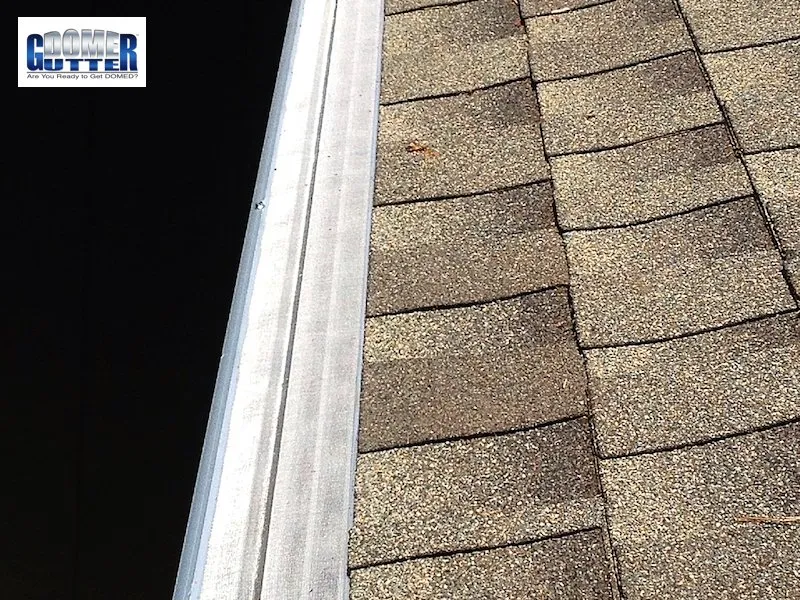
Equipment: the truck, the trailer and the machine
The machine is the line that defines the business. A seamless machine at $5,000–$12,000 is what turns a ladder-and-brackets operation into a fabricator: you buy coil instead of pre-cut lengths, you form the gutter on site to the exact run, and you stop paying a supplier’s margin on every foot.
The truck range is where sources disagree, and we are not going to average them. One 2026 itemisation puts a work truck at $10,000–$35,000. A machinery vendor’s guidance puts a used truck or van at the same $10,000–$35,000 — but treats hand tools and inventory separately, which changes which line the money lands in. If you already own a vehicle, both ranges are irrelevant to you and your real entry cost is the machine plus the trailer.
Licensing, bonds and insurance in year one
Licensing is a state question. The pattern: a state contractor licence with a bond in roughly thirty states, a home-improvement registration in states that regulate residential remodeling, and city-level registration where there is no state licence. Permits run $50–$250 per job where required.
Insurance is where the year-one budget actually breaks. General liability at $1,200–$3,500 and commercial auto at $1,500–$3,500 are predictable. Workers’ comp is not: roofing and exterior class codes carry high rates, and a three-man crew can land between $5,000 and $15,000+ in the first year. Budget it before you hire, not after.
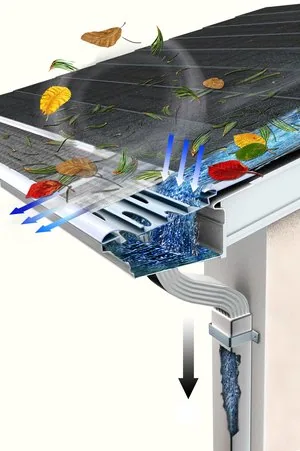
The lean start: what you can finance or defer
The $3,000 start is real, and it is not a trick. One operator bought a lease-to-own 7x14 trailer, financed the machine, and put ladders and tools on store credit — roughly $1,200 a month in payments, no large cash outlay. Another started with a cargo trailer and a used 5-inch machine on a pickup he already owned.
What that route costs later: interest, a machine tied to a payment schedule, and downtime you cannot afford when the machine is the only one you have. Financing buys entry; it does not buy resilience. Both veterans quoted in the trade-association write-up explicitly push back on the belief that you need $20,000–$40,000 before you can start.
Want to hold the product before you commit to a line?
The GutterDome Dealer Kit has the tri-fold brochure, postcard and product samples — the fastest way to see whether this fits the work you already do.
What the same money buys if you add gutters to a business you already run
If you already own a truck, carry a licence and insurance, and have a crew, most of this table is already paid for. The marginal cost of adding gutters is the machine, the coil, and the training — not the business. That changes the maths completely, and it is the reason contractors with an existing book of work get to a profitable gutter line faster than a new operator does.
That route is laid out on adding gutter services to your existing business.
Where the cost shows up in year two
Year one is capital. Year two is operating: crew wages, coil consumption per foot installed, vehicle maintenance, and marketing spend once word of mouth stops being enough. None of those lines is fixed, and the two that scale with volume — coil and labour — are also the two you can price against. The revenue side of that equation is what a gutter guard dealer earns.
Sources
- startpermit.com — 2026 gutter-installation startup itemisation (all cost bands in the table).
- newtechmachinery.com — machinery vendor guidance on used truck and hand-tool costs.
- raingutterassociation.org — named operators on the lease-to-own and financed routes.
- 29 CFR 1926.501(b)(1) — fall protection at six feet, read from the eCFR.