Starting a gutter business comes down to four moves: form the entity, confirm your state’s licensing rule, buy or finance a seamless gutter machine, and carry general liability plus commercial auto.
Published startup-cost tables put a fully equipped first-year setup at roughly $31,300–$79,200, while operators who finance a barebones trailer-and-machine rig report getting started for about $3,000. The constraint on this trade is rarely demand — it is licensing, crew and cash flow in the first ninety days.
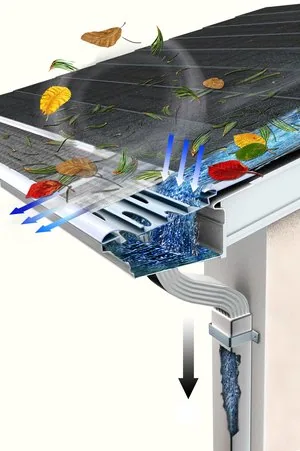
What it takes to start a gutter business
Five lines, in the order they actually block you:
- Entity — an LLC or corporation. Filing runs $50–$500 depending on the state.
- Licensing — the variable nobody checks first (see below).
- Insurance — general liability, commercial auto, and workers’ comp the moment you hire.
- Equipment — a seamless machine, a trailer, ladders, fall protection, hand tools and the first coil.
- First customers — not a marketing problem at this size; it is a route-density problem.
Do you need a license to install gutters?
It depends on the state, and the rule is usually written for roofing or home improvement rather than for gutters specifically. In practice you will meet one of three patterns:
- A specialty or contractor licence that covers gutter work under a broader classification (roofing, sheet metal, or general building). Several states require a state contractor licence plus a surety bond; published guidance puts that requirement in roughly thirty states.
- Home Improvement Contractor registration — common in states that regulate residential remodeling. Cheap to file, easy to miss.
- No state licence, but city or county registration — the work is unlicensed at state level and still requires a local permit for the install.
Confirm your own state’s rule with the licensing board before you sell the first job — and note that this article deliberately does not state a Tennessee rule, because we could not source one.
Sources: startup-permit and licensing bands from a published 2026 gutter-startup guide; licensing patterns repeated here at the level of the pattern, not a per-state claim.
What equipment you actually need on day one
The single largest decision is the machine: a seamless gutter machine typically runs $5,000–$12,000. Around it:
- Trailer — a 7x14 enclosed or open trailer is the common first rig; lease-to-own keeps the cash outlay down.
- Ladders and fall protection — OSHA requires fall protection at 6 feet above a lower level (29 CFR 1926.501(b)(1)). Guardrail, safety net, or personal fall arrest; pick one and train on it.
- Hand tools — snips, crimper, seamer, pop-rivet gun, level, chalk line.
- First coil — sold in 350 lb rolls (about 1,000 feet) or mini rolls around 200 lb. Mini rolls cost more per foot and tie up less cash — the right call for your first month.
What you can defer: a new truck (use the one you own), a full coil inventory, and pneumatic tools until the schedule justifies them.
How much capital you need before your first install
Budget the fully equipped number only if you are buying everything new at once: published itemisations put that at $31,300–$79,200, and the truck plus machine are the two biggest lines. If you already own a truck, or you finance the machine, the entry point drops hard — one operator with a lease-to-own trailer and a financed machine reports starting for about $3,000, carrying roughly $1,200 a month in payments.
The full line-by-line breakdown, including insurance you cannot skip and the items nobody budgets for, lives on what it costs to start a gutter business.
Your first ten customers
At zero marketing budget, four channels do the work:
- One-street canvassing. Gutters are visible from the road. Do one street properly, leave a door hanger with a photo of the finished run, and let the neighbours see the work.
- Crew and trade referrals. Roofers, siders and window installers are on the roof before you are. Ask them for the gutter work they do not want to run.
- Google Business Profile with real photos and a service area that matches where you will actually drive.
- Reviews after every job — the ask is part of the close, not a follow-up email a week later.
Want to hold the product before you commit to a line?
The GutterDome Dealer Kit has the tri-fold brochure, postcard and product samples — the fastest way to see whether this fits the work you already do.
Installing gutter guards is the margin that comes with the install
Once the gutter run is on the house, the guard is the second line item on the same invoice — the fascia is already exposed, the ladder is already up, and the customer has already said yes to spending money on their gutters. According to SRS Building Products’ Tim MacVeigh, leaf protection can add roughly 30% on top of the gutter job. That is a distributor’s observation, quoted and attributed, not our projection.
The operating difference between commodity mesh and a fabricated system matters here: extruded aluminium with a stainless micro-mesh is a different sale, a longer warranty conversation, and a product you can carry in six SKUs instead of a catalogue.
If you would rather skip the equipment, licensing and cash-flow build entirely, that is exactly what the GutterDome Dealer Program replaces — protected territory, Dealer pricing, and a product line already engineered. You can read the honest version of the first ninety days in First 90 Days as a GutterDome Dealer.
Sources
- startpermit.com — 2026 gutter-installation startup itemisation (startup total, machine, licensing bands, insurance).
- raingutterassociation.org — operator accounts of lean starts and financed equipment.
- 29 CFR 1926.501(b)(1) — fall protection at six feet, read from the eCFR.