Start With the Anatomy of One Job
Gutter protection is a small-ticket installation with a large ticket attached to it, and the profit lives in the difference between the two. Take a typical single-family home: roughly 180 linear feet of gutter, one day of work for a two-person crew, one trip, one invoice. Everything else is arithmetic.
There are only four numbers in the job: what the homeowner pays, what the material costs you, what the labor costs you, and what is left. The first and third of those barely move from job to job. The second is where you have leverage, and the fourth is where you find out what kind of business you are actually running.

The labor number is not something you can negotiate with yourself. A two-person crew for a day is a real, recurring cost wherever you operate, and rates for construction labor are published by the Bureau of Labor Statistics if you want a defensible baseline for your market. That number goes up over time. Your material cost, handled well, does not have to.
Why the Product Determines the Margin
Here is the structural difference between selling a commodity mesh guard and selling a premium extruded aluminum system. On a commodity guard, the homeowner is shopping a number per linear foot, because there is nothing else to shop. You are bidding against whoever is cheapest in the zip code, and the material is thin enough that the price is the whole conversation.
On a premium system, the homeowner is buying a material spec, a warranty term and a permanent answer to a problem they have lived with for years. The comparison set changes. You stop competing with the cheapest installer and start competing with the cost of the problem: what the homeowner has already spent on cleaning, what a full gutter replacement costs, and what water damage at the foundation costs when it finally happens.
That last number is the one that closes jobs. Homeowners routinely pay a few hundred dollars a season for gutter cleaning and think of it as a maintenance line item, but published cost data makes the compounding obvious once it is laid out over ten years. Ten seasons of cleaning is not a maintenance habit, it is the price of not solving the problem — and it comes with ladder risk every time.
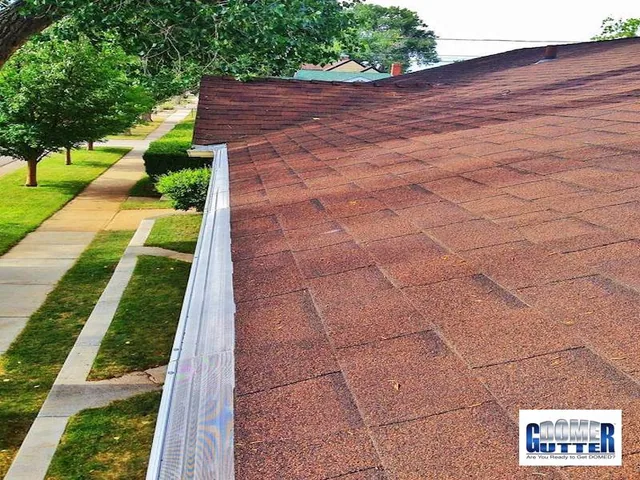
What a Season Actually Produces
Model it conservatively, because conservative models are the ones you can trust. Assume a two-person crew working a normal season: three installs a week for the working months, with weather days and admin days built in. Assume one job a day in the busy stretches and half that in the shoulder season.
The variable that swings everything is not volume, it is contribution per job. A commodity install at a thin margin requires you to run a volume machine — more crews, more trucks, more leads, more scheduling overhead — to produce the same take-home. A premium install carries more contribution per trip, which means fewer jobs for the same money, which means lower overhead and less operational risk.
Run both versions on paper before you pick a product. Same number of days on a roof, same crew, same market — one pays for the truck and one pays for the business.
The Costs Nobody Models
Two costs eat Dealer margins that never show up in a per-job spreadsheet.
Callbacks. A product that fails sends you back to a house you already finished, on your own dime, usually in the season you cannot spare a crew. The economics of a callback are three times worse than a slow week, because you lose the crew day and take a reputational hit at the same address.
Lead acquisition. Buying a lead costs real money, and a lead that arrives with no brand recognition behind it converts worse than a referral. Corporate leads that arrive warm, in a territory you actually own, change the shape of your cost structure — that is the practical difference between paying for demand and being handed it.
The Only Two Levers That Matter
Once you know your contribution per job, you have exactly two ways to grow: install more jobs, or make each job worth more. The first is a volume game that competes with everyone in your market. The second is a product-and-positioning game you control.
That is the honest summary of Dealer economics. The product you choose sets your ceiling, the territory you hold sets your reach, and the only variable you can pull hard on in your first year is which one you pick. Check whether your market still has an open territory — and then run the numbers for your own install costs before you commit to a volume you cannot service.
Pricing Without Guessing
The fastest way to lose money in this trade is to price off what you think a homeowner will pay. Price off the job instead, and write the number down in a way you can reuse.
- Measure every job. Linear feet, roof pitch, number of stories, downspout count, and whether any run needs a custom insert. Two houses on the same street can differ by a full crew-day of labor.
- Price the labor you actually spend. Include the trip, the setup, the ladder time and the cleanup — not just the installation hours.
- Add a real margin, then hold it. A price you have to defend once is a price. A price you drop the first time someone hesitates is a discount habit, and it trains your market.
- Quote the warranty in the same breath as the price. The homeowner should never hear the number without hearing what protects it.
Do this for twenty jobs and you will have a reliable cost model for your own market, which is worth more than any industry average — including the ones in this article.
What Separates a Good Year From a Great One
Volume gets the attention, but the Dealers who have good years without burning out are the ones with a repeatable job: a measured quote, a crew that installs the same system the same way, a follow-up that catches small problems, and a referral request at the moment the homeowner is happiest.
None of those are product decisions, and all of them are cheaper than buying more leads. The product sets the ceiling. The process decides how much of that ceiling you actually reach.